

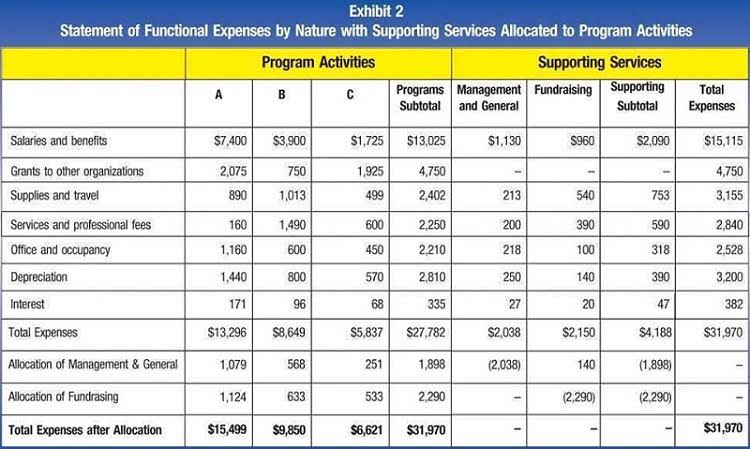
Its Connect plan further allows churches to engage members in personalized ways. Finally, its top-tier Multiply plan has tools to manage multi-campus church membership and funding. Most nonprofits also compile a statement of functional expenses—which provides an in-depth view of the organization’s program, administrative, and fundraising costs—as a part of the IRS Form 990. Since churches usually aren’t required to file that form, whether you have to compile a statement of functional expenses depends on state regulations. However, the statement can also help with the budgeting process, so you might choose to create one even if it isn’t required. Regularly reporting your church’s finances is important to ensure transparency with your congregation and comply with state and federal regulations.
Tool #1: Church Accounting Software
- We understand the unique challenges of managing church finances because we’ve been there.
- The Statement of Functional Expenses is an essential financial report for nonprofit accounting.
- Staying informed on tax regulations prevents penalties and supports financial health.
- They will also need a separate bookkeeper to keep track of funds throughout the year.
- This structured approach ensures transparency and accountability in managing church finances.
Take your time, do your research – set yourself up for long term success. Setting up fund accounting involves customizing the chart of accounts to the church’s needs, as standardized charts may not be ideal. Dedicated accounting software simplifies this process and improves reporting accuracy. Smaller churches can use a volunteer or part-time employee with fund accounting experience as a bookkeeper. Bookkeepers oversee your church’s payroll, donation, and expense tracking.
Bill management
It is similar to traditional accounting software, but it’s built to handle everything related to church finances. It includes features like tracking tithes and offerings, balancing the church accounting books, creating reports, organizing funds, and paying vendors and staff. This article will discuss what church accounting software is and the differences between churches and for-profit businesses, why you should use a church accounting system, and the features and benefits of church financial software. IconCMO is a church management software that provides tools for membership management, contributions and donations management, financial management, event management, communication, and reporting.
We Know Church Accounting.
It helps manage finances by tracking donations, handling expenses, gym bookkeeping and generating financial reports with ease. Church software also aids in member management, allowing leaders to maintain up-to-date contact information, track attendance, and organize events seamlessly. By automating routine tasks like scheduling and communication, it frees up time for church staff to focus on ministry and community engagement.
Nonprofit Tax Services
- Its free plan offers unlimited income and expense tracking, key reports such as Profit and Loss reports, the ability to add unlimited collaborators, cash flow tracking and an intuitive dashboard.
- You can also integrate Donorbox with leading accounting software like QuickBooks to sync donation data in both systems and utilize it for your fund accounting needs.
- Audits identify improvement areas and ensure compliance, supporting financial health and donor engagement.
- “Wave makes your life a whole lot easier and takes that worry off you. I’ve tried Quickbooks—it’s a bit more complicated and technical, and takes more time to set up.”
While it can be helpful for bookkeepers to have specialized education and training, it isn’t required. Depending on your church’s needs and budget, your bookkeeper can work full-time, part-time, or even on a volunteer basis. The free version of CahabaWorks is intended for use by small churches and does have a limited feature set, as well as only giving access to 1 computer.
Seminary’s Not the Problem: Disillusioned Pastors Are Leaving Ministry for a Bigger Reason
Then, at tax time, ministers will still have to pay 15.3% of their gross income for SECA. Our best work is done when we become a true partner, serving as an extension of your team. We will go beyond the numbers to provide accounting efficiencies and financial control to give you and your congregation clarity and peace of mind. With over 20 years of experience working with churches of all sizes, we are focused and passionate about church accounting. Also called a balance sheet, this document shows your financial health related to assets, liabilities, and equity. This statement can be particularly helpful when you want to see individual fund balances for your church.
- In this guide, I explain the basics of church accounting and list ways you can keep your bookkeeping organized and efficient so your ministry isn’t impacted by financial chaos.
- Businesses have one general ledger, while non-profits have an accounting method that manages various types of funds.
- David was very thorough in his process as well as personable in his demeanor.
- ChurchShield has partnered with Summit Church for nearly a decade, working hand in hand with us to manage the many complexities of our organization.
- For tracking budgets and financials across grants, programs, or multiple locations.
- While church bookkeeping and accounting are both essential for effective financial management, the two functions are often confused.
Start by listing all potential income sources, including tithes and offerings, fundraisers, and facility unearned revenue rentals. Estimate the expected amounts based on historical data and current trends. Always ensure that your church meets the requirements for maintaining its tax-exempt status. Familiarize yourself with federal guidelines and any local regulations that apply. Regularly review your church activities and financial practices to ensure they align with compliance regulations. These are just a few of the many ways that churches can make money, but there is so much more you can do.